Organizing Electronic Payments: A Practical Guide for Freelancers and Merchants in Saudi Arabia

Organizing electronic payments is a challenge shared by small store owners and freelancers alike: income arriving through multiple channels, invoices that sometimes aren’t documented, and difficulty seeing the full financial picture at any moment. The difference between those who solve this challenge and those who keep struggling with it every month is simple: a clear system for receiving, documenting and tracking payments.
This guide sets out practical steps for organizing electronic payments that suit merchants, small business owners and freelancers. Any merchant can start trying this kind of solution right away: visit the official Tuwaiq Pay website, contact us on WhatsApp, or download the app from Google Play or the App Store.
What Does Organizing Electronic Payments Mean?
Organizing electronic payments means putting a clear system in place for three linked processes: receiving payments from customers through unified channels, documenting every transaction with an invoice or official record, and then tracking these transactions with reports that reflect the real financial position. Whether you run an online store or work as a freelancer, the principle is the same; only the volume and frequency of transactions differ.
Why Is Organizing Electronic Payments Hard for Merchants and Freelancers?
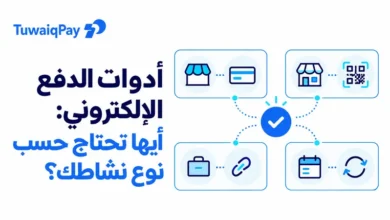
For merchants and small businesses, the difficulty is usually the number of payment channels: one customer pays in cash, another by bank transfer, a third via a payment link, with no unified system bringing them together. This fragmentation makes it hard to know actual net sales or track overdue transactions.
For freelancers, the problem is slightly different: income varies from month to month, and many freelancers use their personal account to receive work payments, which makes it hard to separate business income from personal expenses.
In both cases, without a system for organizing electronic payments, time is wasted on manual review, and sometimes transactions are lost because they weren’t documented properly.
Practical Steps to Organize Electronic Payments
First: Unify your payment channels
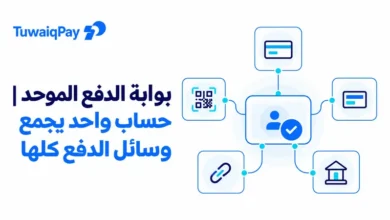
Instead of multiple methods (bank transfers, cash, scattered wallets), use a single tool that brings most common payment methods together in one place, such as a payment gateway that supports both cards and digital wallets. This reduces the need to track each channel separately.
Second: Separate your business account from your personal account
Whether you’re a merchant or a freelancer, mixing business payments with personal expenses makes it hard to know your true net income. An account or wallet dedicated solely to receiving business payments is the essential first step in any system for organizing electronic payments.
Third: Document every transaction with an invoice
Don’t rely on undocumented transfers. An invoice for every transaction, whatever the amount, gives you a clear record you’ll need later when reviewing financial performance or dealing with official bodies.
Fourth: Track transactions with regular reports
Set aside time weekly or monthly to review everything you’ve received. This habit is what turns organizing electronic payments from a one-off task into an ongoing system that reflects how your business is really performing.
Fifth: Allocate received amounts clearly
For merchants: separate what gets reinvested in the business from what’s withdrawn as profit. For freelancers: a common rough split is allocating one part to essential expenses, one part to developing the business, and one part as a reserve for lower-income periods.
How Tuwaiq Pay Helps You Organize Electronic Payments
Tuwaiq Pay is a Saudi payment platform that helps merchants, small businesses and freelancers apply the steps above, through:
- Issuing digital invoices to customers directly, instead of relying on undocumented transfers.
- Receiving payments through a unified channel: payment links and QR codes that bring common payment methods together in one place.
- Tracking every transaction with clear reports in the dashboard, instead of manual review.
- Sub-accounts that let you separate business payments from other activities.
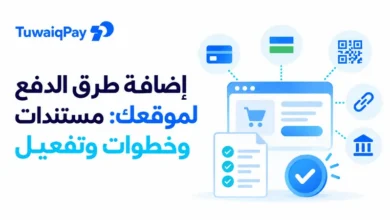
- Connecting your online store to a unified payment gateway for those running a store on platforms such as WooCommerce.
- Registration without a commercial registration for individuals and freelancers specifically.
According to the information published on Tuwaiq Pay’s official channels, there are no setup fees or mandatory monthly subscription. It’s always advisable to check the official pricing page for the latest details before deciding.
Comparison: Before and After Organizing Electronic Payments
| Aspect | Without a unified system | With Tuwaiq Pay |
|---|---|---|
| Documenting transactions | Scattered transfers, often without an invoice | A digital invoice for every transaction |
| Multiple channels | Separate payment methods that are hard to track | One channel bringing common payment methods together |
| Separating accounts | Business payments often mixed with personal ones | Dedicated sub-accounts |
| Reviewing performance | Manual calculations or scattered files | Transaction reports within the platform |
| Need for a commercial registration | Varies by bank or intermediary | Not required for individuals and freelancers |
Start Organizing Your Payments Today
Applying the steps above doesn’t require a complete change in how you work, just one tool that brings them together. You can start tracking your transactions as they happen through the Tuwaiq Pay app on Google Play or the App Store, or contact us on WhatsApp to find the best solution for your business.
FAQs
What is the first practical step in organizing electronic payments?
Unify your payment channels in one place, then separate your business account from your personal account, because these two steps lay the foundation for any clear system that follows.
Does organizing electronic payments differ between merchants and freelancers?
The principle is the same (unify, document, track), but merchants usually need to connect their store to a payment gateway, while freelancers mainly need to separate business income from their personal account.
Does a freelancer need a commercial registration to use Tuwaiq Pay?
No, individuals and freelancers can register and use the service without a commercial registration.
Are there setup fees to use Tuwaiq Pay?
According to the information published on Tuwaiq Pay’s official channels, there are no setup fees or mandatory monthly subscription.