Payment Methods Before the Hajj Season: 5 Steps for Merchants
دليل عملي لتجهيز روابط الدفع وQR وTap to Pay وخيارات الدفع المتعددة قبل زيادة الطلبات الموسمية.
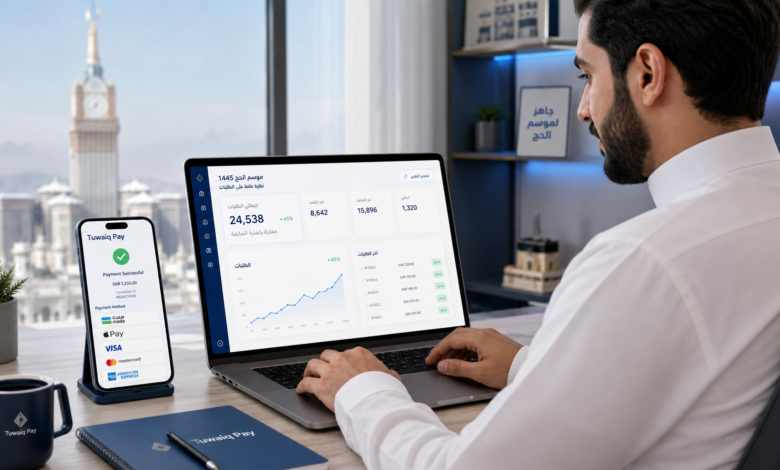
Payment methods before the Hajj season are among the most important preparations a merchant needs before seasonal orders rise, because they help receive payments quickly, reduce collection delays and improve the customer experience.
As the Hajj season approaches, buying activity increases across many businesses in Saudi Arabia, especially online stores, restaurants, cafés, delivery services, gifts, perfumes, clothing and season-related service providers.
But more orders alone aren’t enough. If the payment method isn’t ready and clear, the customer may delay completing the order or abandon the purchase entirely.
That is why merchants need to prepare practical payment solutions before the season begins, such as payment links, QR codes, Tap to Pay and multiple payment options that give customers more flexibility at checkout.
Choosing the right payment methods before the Hajj season doesn’t just help merchants accept payments; it also reduces delays and improves the customer experience from the first step until the order is completed.
In this article, we explain how merchants can prepare before the Hajj season, and the key payment methods that help them receive orders quickly and reduce lost sales.
Why Do Payment Methods Before the Hajj Season Matter to Merchants?
The Hajj season isn’t an ordinary period for many businesses in Saudi Arabia. During this time, customers look for speed and clarity, especially when buying products, booking services, paying deposits or completing urgent orders.
A merchant who prepares only products and offers, but forgets to prepare the payment method, may face a problem at the most important stage of the customer journey: completing the order.
The customer may be ready to buy but can’t find a suitable payment method. Or the merchant may ask for a manual bank transfer, then wait for proof of transfer, review the transaction and then confirm the order. These steps can cause delays, especially under seasonal pressure.
That is why preparing payment methods before the Hajj season helps merchants:
- Receive orders quickly.
- Reduce manual follow-up with customers.
- Make it easier to collect a deposit or the order value.
- Reduce the chance of customers abandoning orders.
- Improve the shopping experience.
- Organize financial transactions more clearly.
- Support more than one sales channel at the same time.
The clearer and easier the payment method, the higher the chance of completing the order the first time.
What Happens If Payment Methods Aren’t Ready?
Not preparing payment methods before the Hajj season can cause direct operational problems, especially if the merchant relies on daily or quick orders.
Key problems include:
- Delays in confirming orders.
- Time wasted reviewing bank transfers.
- Pressure on customer service from many inquiries.
- Losing some customers because the payment step is complicated.
- Difficulty collecting deposits.
- Unclear transaction status.
- A weak customer experience at a time when speed is needed.
In busy seasons, customers don’t want many steps. They want to choose the product or service, pay easily, and get clear confirmation that the transaction succeeded.
This is where suitable digital payment solutions such as payment links, QR, Tap to Pay and multiple payment options come in.
1. Payment Links for Quick Orders
Payment links are one of the most important solutions merchants need before the Hajj season, especially if they receive orders through WhatsApp, Instagram, Snapchat, phone or direct messages.
Instead of sending bank account details and waiting for a screenshot of the transfer, the merchant can send the customer a direct payment link. The customer opens the link, chooses a suitable payment method, and pays in a clear, organized way.
One of the key aspects of payment methods before the Hajj season is that they suit how the merchant sells, whether through an online store, WhatsApp or in a shop.
When do merchants use payment links?
Payment links can be used in many cases, including:
- Gift orders related to the Hajj season.
- Collecting a deposit before preparing the order.
- Orders via WhatsApp.
- Orders from Instagram or Snapchat.
- Home or field services.
- Delivery orders.
- Custom or made-to-order products.
- Services from freelancers and service providers.
A payment link makes collection easier because it moves the customer straight from ordering to paying, without complexity or a long wait.
2. QR for Payment in the Shop or at Pickup
A QR code is a practical solution that can help merchants during the Hajj season, especially if they have a shop, temporary point of sale, kiosk or order pickup location.
Instead of waiting through many steps, the customer can scan the QR code with their phone, open the payment page and complete the transaction easily.
Using QR helps reduce crowding, speed up payment and make the in-store customer experience easier.
Where can QR be used before and during the Hajj season?
Merchants can use QR in many situations, such as:
- Inside the shop.
- At the checkout counter.
- At temporary points of sale.
- With delivery drivers.
- At seasonal events.
- When orders are picked up.
- In service offices.
- In restaurants and cafés.
The advantage of QR is that it is simple and clear and needs no long explanation for the customer. They just scan the code and complete payment.
3. Tap to Pay to Accept Payments on Your Phone
Tap to Pay, or contactless payment through the phone, helps merchants accept payments more flexibly, especially if they move between customers or work in different locations.
Instead of relying entirely on an extra payment terminal, the merchant can accept payment through their phone, depending on the service available to them. This suits merchants who don’t want to complicate operations or add more devices during the season.
Who benefits from Tap to Pay?
Tap to Pay suits many businesses, such as:
- Field sellers.
- Delivery drivers.
- Temporary kiosks.
- Service providers.
- Merchants at events.
- Small business owners.
- Mobile points of sale.
- Merchants who serve customers outside the shop.
Having Tap to Pay reduces the chance of losing a sale because no suitable payment method is available at that moment.
4. Multiple Payment Options to Reduce Lost Customers
Not all customers pay the same way. Some prefer to pay with mada, some use Apple Pay, and others rely on Visa, Mastercard or American Express.
That is why the more payment options a merchant offers, the higher the chance of completing the order. Customers don’t want to change their preferred method; they want to find a payment method that suits them from the start.
With Tuwaiq Pay, merchants can offer multiple payment methods including mada, Apple Pay, Visa, Mastercard and American Express.
This flexibility is very important before the Hajj season, because customers may come from different channels and need an easy payment experience whether through an online store, payment link, QR or Tap to Pay.
You can learn more about Saudi Arabia’s national payment network on the official mada website.
You can also refer to the Saudi Central Bank (SAMA) for information on payment systems in the Kingdom.
5. Connect Your Online Store Before Orders Increase
If the merchant sells through an online store, integrating a payment gateway before the season is a very important step.
A customer who enters the store and chooses a product doesn’t want to leave the shopping experience because of an unclear payment method or too many steps.
Connecting the online store to a suitable payment method helps to:
- Make order completion easier.
- Reduce cart abandonment.
- Improve the customer experience.
- Speed up receiving payments.
- Organize orders within the store.
- Reduce the need for manual transfers.
The Best Payment Methods Before the Hajj Season for Merchants
Choosing the right method depends on how you sell. Some merchants need payment links for quick orders, some need QR in the shop, and others need Tap to Pay for field sales.
The following table helps merchants compare the main payment methods before the Hajj season and choose the most suitable one for each sales channel.
| Payment method | When does the merchant use it? | Benefit for the merchant | Benefit for the customer |
|---|---|---|---|
| Payment links | Orders via WhatsApp, Instagram or phone | Faster collection and less manual follow-up | Direct payment without complicated transfers |
| QR | In the shop or at pickup | Less crowding and faster payment | Scan the code and pay easily |
| Tap to Pay | Field sales, delivery or mobile points of sale | Accept payment on a phone without an extra device | A fast contactless payment experience |
| Online store integration | Stores that receive online orders | Less cart abandonment and better order completion | Direct payment within the store |
| Multiple payment options | All sales channels | Fewer lost customers | Freedom to choose a suitable payment method |
How Do Merchants Prepare Payment Methods Before the Hajj Season?
To benefit from the season, merchants should review the entire payment experience before the rush begins. Preparation doesn’t just mean activating a payment method; it means making sure customers can pay easily from any sales channel they use.
Review your current sales channels
Start with a clear question: Where do my orders come from?
Do they come from WhatsApp?
Do they come from Instagram?
Do I have an online store?
Do I serve customers in a shop?
Do I need to collect deposits?
Do I have delivery staff or field sales?
Answering these questions helps you choose the right payment method for each channel.
If most orders come from WhatsApp, payment links will likely be very important.
If you have a shop or pickup point, you may need QR.
If you sell in the field, Tap to Pay may be a practical option.
Prepare payment links for seasonal products and services
Before the season starts, identify the products or services you expect demand to rise for. Then prepare a quick way to send the customer a payment link.
For example, you can prepare short messages for your sales or customer service team so the payment link is sent as soon as the order is confirmed.
The shorter the time between the customer’s interest and receiving the payment link, the higher the chance of completing the transaction.
Test the payment experience before the season
Don’t wait for the rush to discover a problem with your payment method.
Before the Hajj season, try it yourself:
- Create a payment link.
- Open the link on a phone.
- Test the payment page.
- Make sure the transaction appears.
- Review the successful payment notification.
- Make sure the order details are clear.
- Try more than one payment method.
This simple step helps reduce errors during the season.
Train your team to use the payment methods
If you have employees, delivery staff or a customer service team, they need to know how to use the available payment methods.
Train them to:
- Send a payment link.
- Explain the payment method to the customer.
- Use QR.
- Handle Tap to Pay.
- Confirm the transaction succeeded.
- Know which payment methods are supported.
- Answer customer questions quickly.
Customers don’t care about technical details. They want an easy, clear experience. That is why a well-informed team is an important part of a successful payment experience.
Show payment methods on your accounts and pages
Before the Hajj season, update your accounts, posts and product pages. Tell customers clearly that payment is available in multiple ways.
You can use phrases such as:
- Payment available via a direct link.
- We offer multiple payment options.
- Pay with mada, Apple Pay, Visa, Mastercard or American Express.
- QR payment available.
- Contactless payment available, depending on the service.
- Order now and pay easily.
These phrases reduce repeated questions and help customers decide faster.
How Does Tuwaiq Pay Help Merchants Before the Hajj Season?
Tuwaiq Pay provides payment solutions that help merchants prepare payment methods before the Hajj season in a practical way that suits many businesses and sales channels.
Whether you sell through an online store, receive orders via WhatsApp, need to collect deposits, or work in field sales, Tuwaiq Pay can help make your payment experience easier and more organized.
Through Tuwaiq Pay, merchants can benefit from:
- Creating payment links.
- Using QR.
- Tap to Pay support.
- Online store integration.
- Multiple payment options.
- Accepting payments via mada, Apple Pay, Visa, Mastercard and American Express.
- Clearer tracking of transactions.
You can learn more about Tuwaiq Pay’s solutions on the official website.
Payment Methods Before the Hajj Season Reduce Abandoned Orders
In many cases, a customer doesn’t abandon an order because they aren’t interested, but because they couldn’t find a suitable payment method or faced too many steps before completing it.
Every extra payment step can lower the chance of completing the order, especially in seasons when customers look for speed.
That is why preparing payment methods before the Hajj season helps reduce abandoned orders, because the customer finds a clear, fast payment method that suits them.
Merchants can also refer to the Saudi Ministry of Commerce for information on business activities and the regulatory environment in the Kingdom.
To learn more about official Hajj and Umrah services, you can visit the Nusuk platform.
Quick Checklist Before the Hajj Season
Before the season starts, make sure of the following points:
| Step | Done? |
|---|---|
| Activate payment links | Yes / No |
| Prepare QR for use in the shop or at pickup | Yes / No |
| Make sure Tap to Pay is ready | Yes / No |
| Test a complete payment from a phone | Yes / No |
| Update payment methods on social accounts | Yes / No |
| Train the team to send payment links | Yes / No |
| Make sure successful payment notifications appear | Yes / No |
| Show payment methods to customers before ordering | Yes / No |
This checklist helps merchants spot any gaps before the rush begins, instead of dealing with them during the season.
Conclusion
The earlier a merchant starts preparing payment methods before the Hajj season, the better they can receive orders with confidence and reduce lost sales.
A good product and the right offer matter, but the payment method may be the deciding factor in completing the order. If payment is slow or unclear, the merchant may lose a customer who was ready to buy.
Through payment links, QR, Tap to Pay and multiple payment options, merchants can receive orders faster and in a more organized way, and give customers an easy payment experience that fits their needs.
Start preparing your payment methods before the Hajj season, and make payment easier for your customers and clearer for your business with Tuwaiq Pay.