Payment Links and QR Codes in 5 Different Sectors
حلول دفع مرنة تساعد الأنشطة التجارية والخدمية على تسهيل التحصيل، تقليل المتابعة اليدوية، وتنظيم عمليات الدفع اليومية.
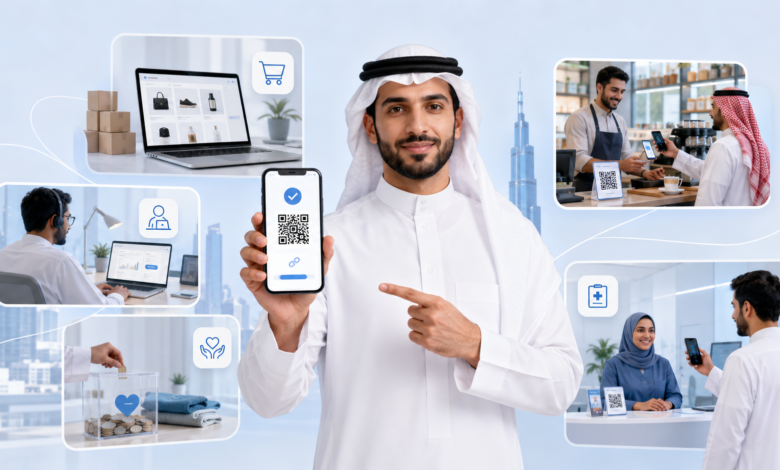
Payment links and QR codes have become some of the most important electronic payment solutions helping different sectors in Saudi Arabia simplify collection, organize payments and improve the customer experience. Instead of relying on manual transfers or waiting for proof of payment, a merchant or service provider can send a direct payment link or display a QR code so the customer can complete payment in a few simple steps.
As digital payments expand across the Kingdom, commercial and service businesses need more flexible payment tools that suit selling online, selling in-branch, bookings, deposits, donations, invoices and field orders.
The Kingdom’s move toward digital payments shows the importance of providing practical payment solutions for merchants and businesses, as reflected in the Saudi Central Bank‘s initiatives to develop the payments sector. The mada network also shows the role of digital payment infrastructure in supporting electronic payments within the Kingdom.
This is why payment links and QR codes matter as practical solutions that don’t serve just one sector, but can be used in different ways depending on the nature of each business.
Payment Links and QR Codes Across Different Sectors
How payment links and QR codes are used varies by sector. Some businesses need to send customers a direct payment link via WhatsApp or text message, while others rely on a QR code in the branch, on the invoice or at reception.
The main advantage of these solutions is that they give every business a flexible way to collect payments without complexity. An online store may use a payment link to complete a quick order, a restaurant may use a QR code to make in-branch payment easier, and an association may use a direct link or QR code to make donations easier.
That is why payment links and QR codes shouldn’t be seen as a single tool with a fixed use, but as payment solutions that can be applied according to the customer journey and how you sell or deliver your service.
What Are Payment Links and QR Codes in Digital Collection?
A payment link is a direct link sent to the customer via WhatsApp, text message, email or social media, so they can complete payment easily without a manual bank transfer or sending a photo of proof of payment.
A QR code is a code the customer scans with their phone camera to go directly to the payment page, the invoice or a predefined amount.
The main difference is that a payment link suits direct communication with the customer, while a QR code suits physical locations such as stores, restaurants, clinics, events and reception points.
In both cases, payment links and QR codes help shorten the payment steps, reduce errors and improve the customer experience from the moment of ordering to completing the transaction.
Why Do Different Sectors Need Flexible Payment Solutions?
Every sector has its own way of receiving orders and collecting payments. Some businesses rely on quick sales, some need deposits, some deal with invoices, and some receive payments in the branch or at the customer’s location.
So you can’t always rely on a single payment method. This is where payment links and QR codes add value, giving a business more flexibility to handle more than one scenario.
With these solutions, different businesses can:
- Reduce delays caused by waiting for manual transfers.
- Send a specific amount to the customer directly.
- Make mobile payment easier.
- Organize payments by order or service.
- Reduce collection errors.
- Improve the customer experience.
- Document payment status more clearly.
Using payment links and QR codes isn’t limited to online selling; they can be used for bookings, donations, invoices, deposits and field orders, so the way you benefit depends on the nature of each business.
Modern payment solutions usually support multiple payment methods such as mada, Apple Pay, Visa, Mastercard and American Express, giving customers more freedom to choose the payment method that suits them.
How Payment Links and QR Codes Are Used in 5 Sectors
| Sector | Using payment links | Using QR codes | Main benefit |
|---|---|---|---|
| Online stores | Sending a payment link for orders via WhatsApp or social media | Putting a QR code on the invoice or packaging | Easier order completion and fewer stalls |
| Restaurants and cafés | Collecting deposits for reservations or delivery orders | Placing a QR code on the table or at the cashier | Faster payment and less crowding |
| Service providers and freelancers | Collecting a deposit or final payment | Adding a QR code to the quote or profile | Organized payments and documented collection |
| Associations and initiatives | Sending a direct donation link | Placing a QR code in campaigns and print materials | Easier donations at any time |
| Clinics and centers | Collecting booking or consultation fees | Placing a QR code at reception or on the invoice | Less waiting and a better patient experience |
The table shows that payment links and QR codes can serve the same general goal, making payment easier, but are used differently from one sector to another depending on the customer journey and how collection works.
1. Online Stores
Online stores are among the sectors that most need flexible payment solutions, especially when orders come in through more than one channel, such as the website, WhatsApp, Instagram, Snapchat or direct messages.
In some cases, the customer doesn’t go to the website to complete the order themselves, but contacts the store directly to ask about the product, price or availability. Here the merchant can send a direct payment link for the order instead of sharing a bank account number and waiting for proof of transfer.
Payment links and QR codes help online stores turn interest into a completed purchase faster. The easier the payment step, the greater the chance of completing the order rather than losing the customer while they wait.
A practical example
A store selling seasonal products can send the customer a payment link after confirming the order on WhatsApp. After shipping, a QR code can be placed on the invoice or packaging for the customer to use to order an extra product or pay for another service.
The benefit
- Fewer long conversations with the customer.
- Easier payment for special orders.
- Less reliance on manual transfers.
- A better mobile buying experience.
- More completed orders.
If the store relies on a website, connecting your online store to a payment gateway helps make the buying journey smoother, from choosing a product to completing payment.
2. Restaurants and Cafés
Restaurants and cafés don’t rely only on in-branch payment. There are delivery orders, reservations, events, advance preparations and group orders that need confirming before they are carried out.
A payment link can be used to collect a reservation deposit, pay for a pre-order, or confirm a delivery order before preparation. A QR code can be placed on tables, at the cashier, in the digital menu or in the pickup area.
In this sector, payment links and QR codes help reduce crowding and make payment easier for customers, whether they are in the branch or contacting the restaurant remotely.
A practical example
A café receives a booking for a large group. Instead of confirming the booking verbally, it can send a payment link to collect the deposit and confirm the time. In the branch, a QR code on the table makes paying for extra orders easier.
The benefit
- Fewer non-serious bookings.
- Faster in-branch payment.
- Organized delivery orders.
- Less pressure on the cashier.
- A better customer experience at busy times.
Using payment links and QR codes in restaurants and cafés makes payment a natural part of the customer experience rather than a separate or annoying step.
3. Service Providers and Freelancers
Service providers and freelancers often rely on more than one payment stage: a deposit before starting, a payment after delivery, a payment for an extra service, or a monthly renewal.
In this case, a payment link becomes an important tool for organizing the financial relationship between the service provider and the client. Instead of sending bank account details and following up on transfers manually, you can send a clear payment link for the amount due.
A QR code can also be used in a quote, a professional profile, a service page, or even a PDF sent to the client.
Examples of services that benefit from payment links and QR codes
- A graphic designer collecting a deposit before starting the design.
- A product photographer collecting a booking payment before the shoot.
- A digital marketer collecting monthly fees from a client.
- A trainer or consultant collecting the session fee before the appointment.
- A seasonal service provider splitting payment into a deposit and a final payment.
The benefit
- Clearly organized payments.
- Fewer collection delays.
- Each payment documented by service.
- Easier payment for the client.
- Fewer awkward moments around financial follow-up.
If your business relies on deposits or staged payments, payment links and QR codes help make payment more professional and clear.
Service businesses can also benefit from solutions such as organizing payments for seasonal services or using a payment link to collect deposits to reduce delays and make the payment steps clear to the client.
4. Associations and Charitable Initiatives
Associations and charitable initiatives need an easy, fast way to pay, because donors usually want to complete their donation immediately without long or complicated steps.
Payment links can be used in campaign messages, social media pages, email or WhatsApp messages. QR codes can be used in print materials, banners, events, kiosks or donation points.
In this sector, payment links and QR codes help reduce friction in the donation journey. Every extra step may make a donor postpone or back out, while a direct link or clear QR code makes the decision to donate easier and faster.
A practical example
An association launching a seasonal campaign can put a QR code on the campaign design or banner so donors can scan it and pay directly. It can also send a dedicated payment link for each campaign via WhatsApp or text message.
The benefit
- Easier donations at any time.
- Support for field and digital campaigns.
- Less need for manual transfers.
- Donations organized by campaign.
- A better donor experience.
Using payment links and QR codes in charitable campaigns makes donating easier, especially when the message is clear and the payment method direct.
5. Clinics and Medical and Beauty Centers
Clinics and medical and beauty centers need clear organization of bookings and payments, especially for consultations, sessions, packages or services that require advance booking.
A payment link can be used to collect booking fees before the appointment, pay for an online consultation, or pay part of a treatment or beauty package. A QR code can be used at reception, on the invoice or in follow-up messages after the visit.
In this sector, payment links and QR codes help reduce waiting, organize bookings and reduce manual transactions in the center.
A practical example
A beauty center offering a package of sessions can send the client a payment link to confirm the booking. When the client arrives, a QR code at reception can be used to pay for any extra services or products related to the session.
The benefit
- Less waiting at reception.
- Clearer booking confirmations.
- Organized package payments.
- Easier payment for consultations.
- A better patient experience from booking to payment.
When payment is easy and clear, clients feel the experience is more organized and professional, which matters a great deal in clinics and service centers.
Benefits of Payment Links and QR Codes for Merchants and Businesses
Payment links and QR codes help merchants and businesses reduce manual follow-up, make mobile payment easier, organize collections and improve the customer experience across touchpoints.
Whether the customer contacts you on WhatsApp, visits an online store, walks into a physical branch, or needs to pay a deposit before a service is carried out, these solutions can make the payment step faster and clearer.
Key benefits of payment links and QR codes for merchants and businesses include:
- Less time wasted following up on transfers.
- Easier mobile payment for customers.
- Payments organized by order or service.
- Fewer amount entry errors.
- A better customer experience.
- Support for more than one sales or collection scenario.
- A more professional and clear payment process.
The easier the payment method, the better a business can turn orders and inquiries into completed transactions.
How Do You Choose How to Use Payment Links and QR Codes for Your Business?
Choosing the right way to use payment links and QR codes depends on the nature of your business and how customers communicate with you.
If your business relies on orders via WhatsApp or social media, a payment link may be the best option for sending a specific amount to the customer directly.
If you have a physical location such as a restaurant, clinic, store or reception point, a QR code may suit you better for making payment on site easier without long steps.
In many cases, you can combine payment links and QR codes. For example, you can send the customer a payment link before they arrive, and use a QR code in the branch or on the invoice to make any extra payments easier.
This makes payment more flexible, and each sector can use the solution in the way that suits its customer journey and buying behavior.
How Does Tuwaiq Pay Help Different Businesses?
Tuwaiq Pay provides payment solutions suited to merchants, businesses and service providers, with tools that help receive payments easily and in an organized way.
With Tuwaiq Pay, different businesses can benefit from:
- Payment links.
- QR codes.
- Invoices.
- E-commerce payment solutions.
- Multiple payment options including mada, Apple Pay, Visa, Mastercard and American Express.
These solutions help reduce manual follow-up, make the customer experience easier and organize collections more professionally.
Whether you run an online store, a restaurant, a service center, an association or an independent business, you can use payment links and QR codes in the way that suits your daily needs and your customers.
Merchants can also benefit from solutions such as a free payment gateway for merchants and connecting online stores to a payment gateway to make receiving payments easier and organize collections.
Frequently Asked Questions About Payment Links and QR Codes
Are payment links suitable for small stores?
Yes. Payment links are very suitable for small stores because they don’t require complicated steps. Merchants can send a direct link to the customer via WhatsApp or any other channel to complete payment easily.
Can a QR code be used in a store?
Yes. A QR code can be used in the store, on tables, at the cashier, on invoices or in marketing materials, depending on the nature of the business.
What is the difference between a payment link and a QR code?
A payment link is sent directly to the customer by message, WhatsApp or email, while a QR code is scanned with a phone camera to reach the payment page. Both aim to make payment easier and reduce the steps.
Are payment links suitable for services that rely on deposits?
Yes. Payment links are very suitable for businesses that rely on deposits, such as photography, design, bookings, training, consulting and seasonal services.
Can payment links and QR codes be used together?
Yes, payment links and QR codes can be used together. For example, you can send the customer a payment link before they arrive, and use a QR code in the branch or on the invoice to make any extra payments easier.
Conclusion
Payment links and QR codes are no longer solutions for just one type of business; they have become practical tools that can be used in different ways across many sectors.
An online store uses them to make completing orders easier, a restaurant for bookings and orders, a freelancer for deposits and staged payments, an association to make donating easier, and a clinic to organize bookings and payment.
The clearer and easier the payment method, the better the customer experience, and the faster and more organized collection becomes.
With Tuwaiq Pay, merchants, businesses and service providers can receive payments flexibly in a way that suits their business and supports their growth in the Saudi market.
Start making your payments easier today with Tuwaiq Pay, and use payment links and QR codes to organize collections and offer your customers an easier way to pay.